
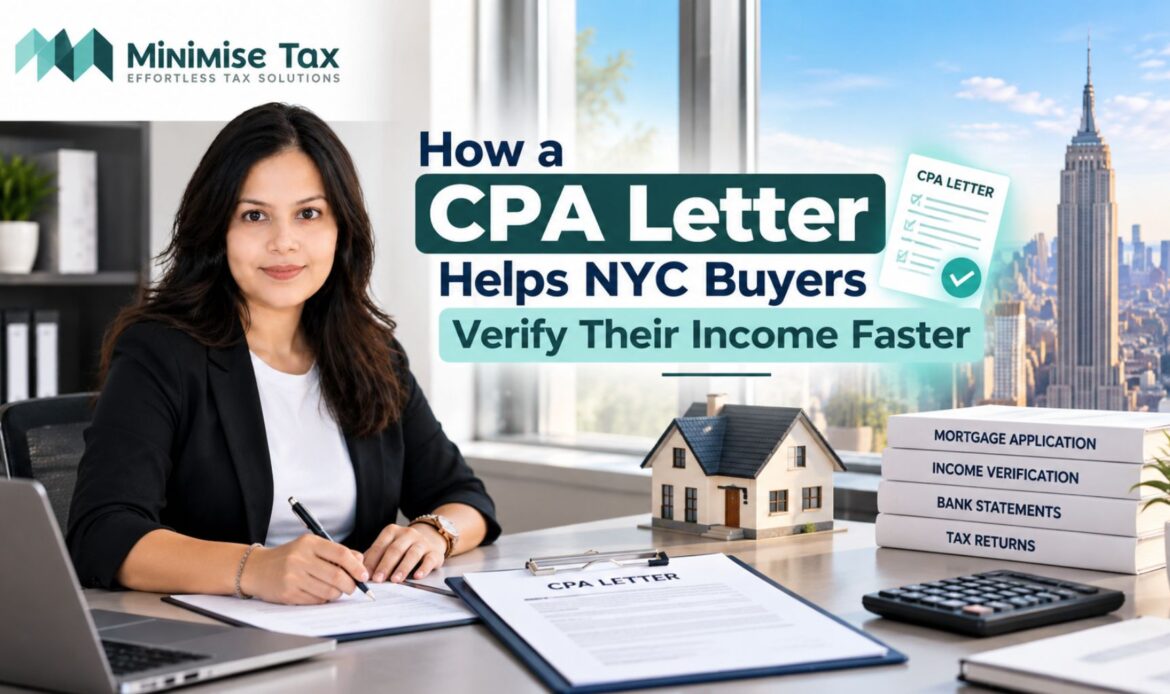
CPA Letter for NYC Home Buyers and Mortgage Income Checks NY
Buying a home in New York City often involves more than finding the right property and securing a mortgage. For self-employed professionals, freelancers, consultants, and business owners, proving income can become one of the most time-consuming parts of the process.
Unlike salaried employees who can present regular pay statements, independent earners may receive income through different clients, business accounts, or seasonal projects. This is where a CPA Letter may help lenders understand the applicant’s financial situation.
A CPA Letter is a professional document prepared by a Certified Public Accountant that may confirm specific financial or business information based on records the accountant can appropriately support.
For NYC buyers, understanding when lenders request this document, what it can establish, and how to prepare for it may reduce unnecessary delays.
Why NYC Mortgage Buyers May Need a CPA Letter
Understanding Income Verification for Self Employed Buyers
Mortgage lenders assess whether borrowers have sufficient, reasonably stable income to support their proposed housing payments. They commonly review tax returns, business records, bank statements, and other financial documentation.
For self-employed applicants, income verification can be more complex because business revenue does not always represent personal qualifying income.
A CPA Letter for Mortgage purposes may provide additional context about the borrower’s business activities or employment status.
However, the letter does not replace the lender’s required financial documentation or guarantee loan approval.
What Information Can a CPA Letter Confirm?
The information included depends on the lender’s request, the accountant’s records, and applicable professional standards.
A CPA may be able to confirm:
Business ownership: The applicant’s documented ownership or involvement in a business.
Self-employment status: The nature and duration of professional activities.
Business operations: Relevant facts about an established business.
Documented financial information: Specific historical information supported by available records.
Professional relationship: How long the accountant has provided services to the applicant.
A CPA should not provide unsupported assurances about future income, business solvency, or the borrower’s ability to repay a mortgage.
How a CPA Letter May Reduce Mortgage Documentation Delays
A well-prepared CPA Income Verification Letter can help address a specific documentation question before it results in repeated requests.
For example, a lender reviewing a consultant’s application might need confirmation that the applicant has operated an independent business for a particular period.
If the accountant has suitable records, a focused letter may help establish that fact.
The main advantage is not bypassing underwriting. It is giving the lender relevant, properly supported information in a usable format.
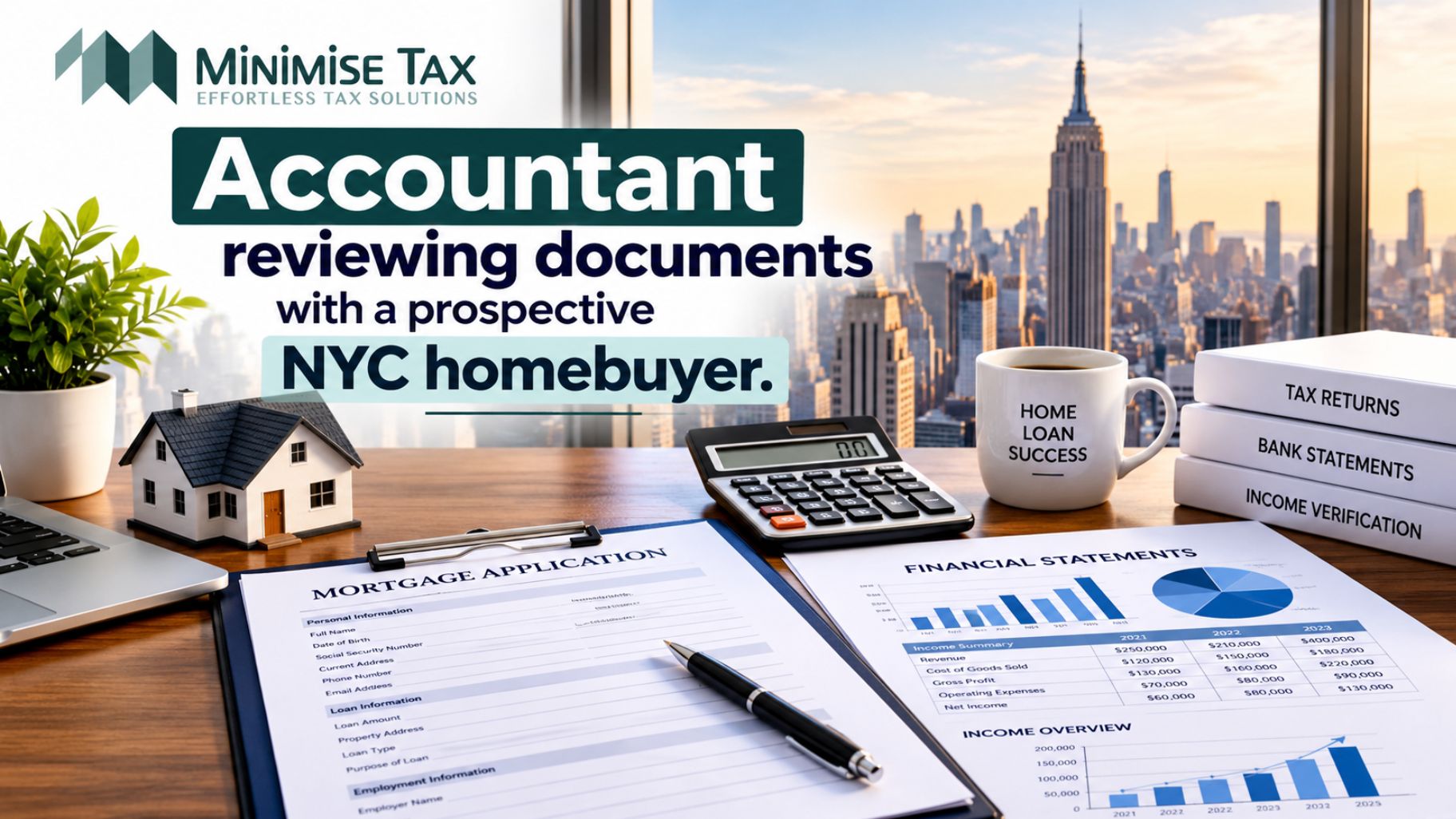
Common Situations Where NYC Buyers Request CPA Letters
Business Owners Applying for Home Financing
Business owners may receive income through salary, distributions, or other arrangements. Lenders often need to distinguish personal income from business receipts. A CPA may clarify documented business facts while the lender independently evaluates qualifying income.Freelancers With Multiple Income Sources
Freelancers frequently work with several clients rather than one employer. Their income may vary across months. A CPA Letter may help confirm the nature of their self-employment when supported by the accountant’s records.Buyers With Complex Business Structures
Applicants involved in partnerships or multiple businesses may face additional documentation questions. A focused letter can address a particular ownership or business-history question without making broad financial guarantees.Get clear answers about CPA Letter requests for NYC mortgage applications including ownership confirmation, document updates and professional limitations today.
How to Prepare a CPA Letter for a Smoother Mortgage Review
Requesting a Letter Without Lender Instructions
A general letter may omit the precise information the underwriter needs.
Obtain the lender’s requirements before asking the accountant to prepare the document.
Confusing Business Revenue With Personal Income
A business can generate substantial sales while having much lower net earnings.
Mortgage qualification depends on the lender’s assessment of eligible income, not simply the amount of revenue reported.
Asking for Unsupported Financial Assurances
Accountants cannot responsibly certify facts they cannot substantiate or provide assurances outside the appropriate professional engagement.
Requests about future business performance or the impact of withdrawing funds may require a different type of professional service or may not be appropriate for a CPA letter.
Avoid These Common CPA Letter Mistakes
Common Situations Where NYC Buyers Request CPA Letters
Business Owners Applying for Home Financing
Business owners may receive income through salary, distributions, or other arrangements. Lenders often need to distinguish personal income from business receipts.
A CPA may clarify documented business facts while the lender independently evaluates qualifying income.
Freelancers With Multiple Income Sources
Freelancers frequently work with several clients rather than one employer. Their income may vary across months.
A CPA Letter may help confirm the nature of their self-employment when supported by the accountant’s records.
Buyers With Complex Business Structures
Applicants involved in partnerships or multiple businesses may face additional documentation questions.
A focused letter can address a particular ownership or business-history question without making broad financial guarantees.
What Happens After the CPA Letter Is Submitted?
Once the lender receives the document, the underwriting team may compare its statements with other submitted records.
The lender may accept the letter, request clarification, or require additional documentation.
A CPA Letter for Home Loan review is therefore one supporting item within a broader mortgage application.
Applicants should respond promptly to follow-up questions and keep their financial information consistent across documents.

Choosing Professional CPA Letter Assistance in New York
Look for an appropriately licensed CPA who understands the requested documentation and can explain the scope of the letter.
An effective process should include reviewing the lender’s instructions, evaluating available records, and identifying which statements can reasonably be made.
Buyers should also ask about fees, expected preparation time, and whether the accountant can respond to reasonable lender clarification requests.
The objective is a clear, accurate, professionally prepared CPA Letter that addresses the lender’s legitimate information needs.
Why Early Preparation Matters in NYC Property Transactions
New York City property transactions can involve multiple professionals, including lenders, attorneys, real estate agents, and accountants.
When income-related questions arise late in underwriting, they can complicate the transaction timeline.
Requesting clarification early gives buyers time to locate records, resolve inconsistencies, and determine whether the accountant can provide the requested information.
A CPA Letter cannot eliminate every underwriting delay, but early coordination may prevent avoidable document-related setbacks.
Frequently Asked Questions About CPA Letters in New York
Yes. A newly self-employed buyer may request a CPA Letter, but the accountant can only confirm information supported by available records. Mortgage lenders may separately require a minimum self-employment history.
Yes. An accountant may confirm documented ownership interests or relevant business facts. The letter should accurately describe the applicant's position rather than imply sole ownership.
Potentially. A New York cooperative purchase may involve both mortgage underwriting and a cooperative board's financial review. Buyers should confirm which party requests the letter and what information it needs.
A CPA may describe supported facts about multiple business interests. Buyers in New York City, across USA lending markets should understand that lenders independently evaluate which income sources qualify.
Requirements vary by recipient. Some lenders may request identifying or licensing information. The accountant should follow applicable professional rules and provide the identification reasonably required for verification.
It may reference properly documented historical information, including amended returns where relevant. The accountant should distinguish verified facts from unresolved filing matters and avoid implying that the lender has accepted the amendments.
Often, yes. Many lenders accept secure electronic documentation, but submission procedures vary. Applicants should confirm the lender's preferred format and secure delivery method before sending sensitive information.
It may help clarify specific documented business or accounting facts. Rental income qualification usually requires separate evidence and lender calculations, so a CPA Letter alone may be insufficient.
Acceptance depends on lender requirements, applicable licensing rules, and the services provided. Buyers in New York City, across USA mortgage markets should confirm whether the accountant meets the lender's professional criteria.
There is no universal expiration period for every CPA Letter. A lender may require recently dated documentation or request an updated letter if the applicant's circumstances change.
Yes. Factual errors should be brought to the accountant's attention. Any correction must be supported by records, and the accountant should issue an appropriately revised document rather than make unsupported changes.
Possibly, but another lender may request different information, wording, or a more recent document. Applicants should verify acceptance before reusing a letter originally prepared for a different transaction.
Move Forward With Reliable CPA Letter Support in New York
Conclusion
For self-employed homebuyers, a CPA Letter can provide valuable context when mortgage lenders request clarification about business ownership, employment history, or other documented financial facts.
The most effective approach begins with clear lender instructions, organized records, and an accountant who understands the limits of professional verification.
Minimise Tax offers CPA Letter services for individuals and business owners seeking professional documentation assistance.
Visit Minimise Tax CPA Letter Services to learn about the service and discuss your documentation requirements.